
By Kris Poole
Background to the project
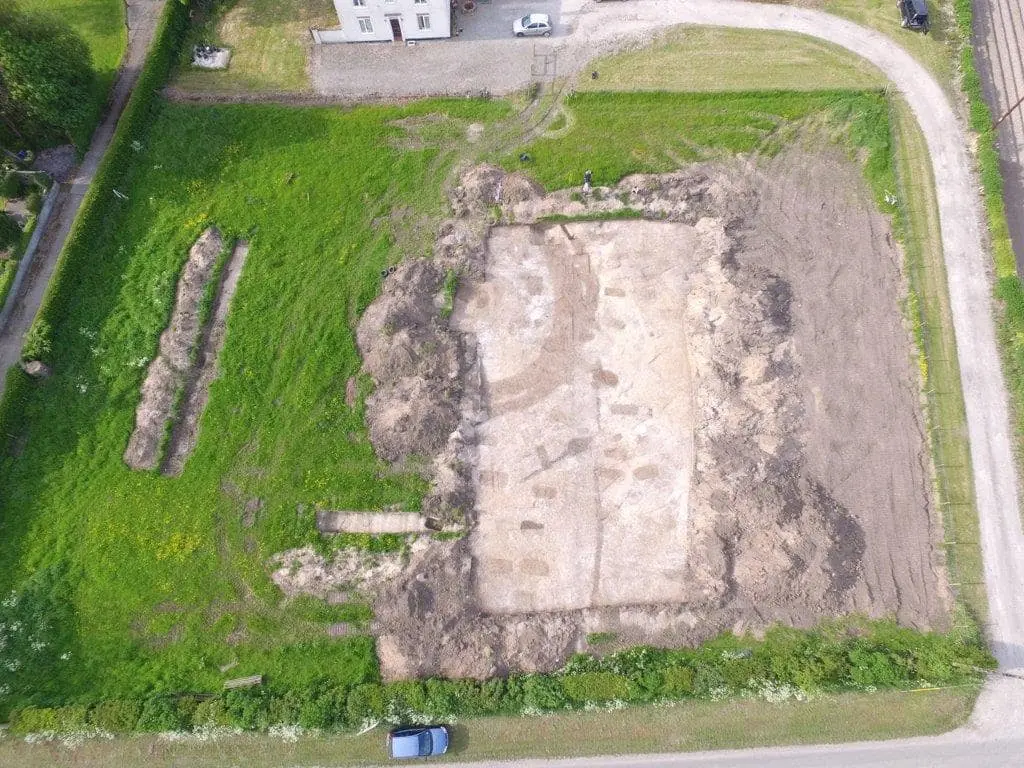
At the beginning of this year, York Archaeology (YA) started work on the final analysis and publication of a Bronze Age and early medieval cemetery at Kilham, East Yorkshire. The excavation was undertaken in 2016 by East Riding Archaeology (ERA), but could only be partly completed. Although not fully excavated, a substantial number of finds and skeletons were recovered, with considerable potential for understanding the region during the Bronze Age and early medieval periods. For this reason, Historic England have provided funding to enable post-excavation work to take place on the site archive.
Following a process of consolidating the archive by ERA from 2019 – 2020, YA were commissioned to undertake post-excavation assessment of the site and to produce an updated project design for the final analysis. This post-excavation assessment has allowed us to consider the quality and quantity of data recovered from the site, and therefore the sorts of information that this material might provide.
Summary of the cemeteries
The site consisted of 107 graves, of which 50 were excavated. Human remains were present in all of the graves, sometimes with more than one person present, except for one feature that contained a horse burial. Two Bronze Age ring ditches were also present, which may have formerly encompassed a central barrow. Of the graves, nine were identified as being of Early Bronze Age date, with the rest attributed to the early medieval period, specifically from the later 5th century CE to the late 6th or early 7th century CE. Bronze Age grave goods found consist of ceramic food vessels, worked flints and a bone pin. There are over 1,100 objects of early medieval date, the majority of which were glass and amber beads, although brooches, wrist clasps and other dress accessories were present, along with a number of iron knives, a small number of weapons and an ivory bag ring.
The potential of the site archive
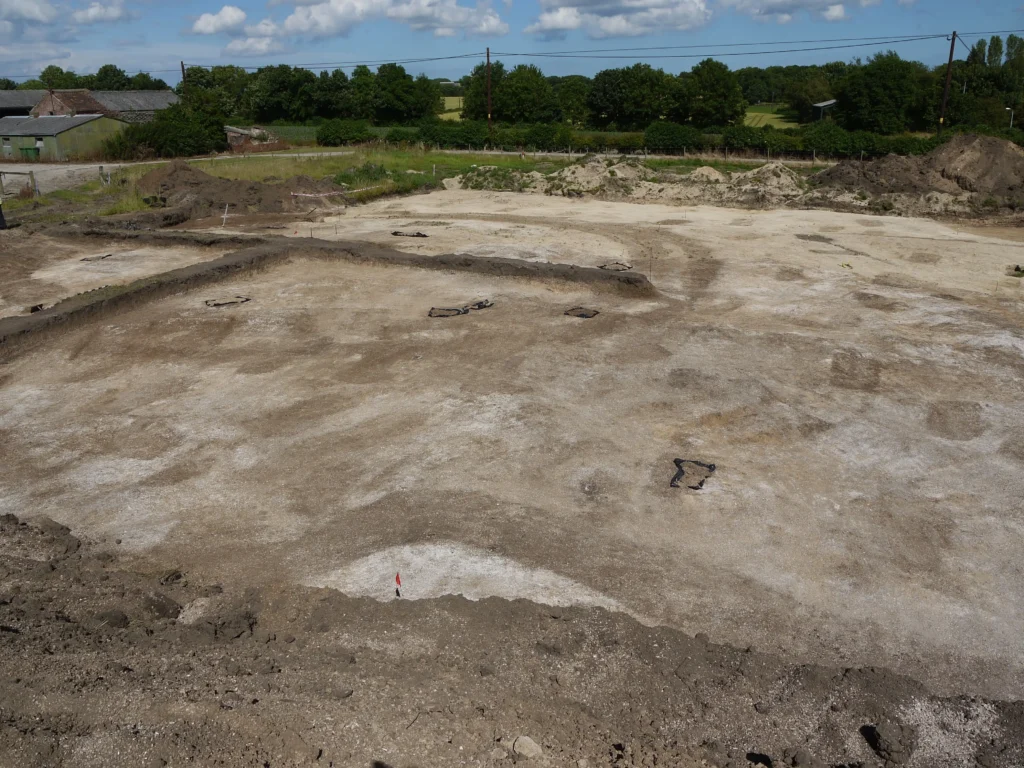
This combination of Bronze Age funerary activity associated with a barrow, and its subsequent use as a focal point for an early medieval cemetery, is a well-recognised trend within the archaeological record for the region (and indeed more generally for England). The vast majority of sites from these periods in the region were investigated by antiquarians in the 18th and 19th centuries. Such explorations typically adopted haphazard approaches to excavation, and to the recovery of finds and human remains. This has led to much of the data from these sites being of poor quality, restricting our ability to understand these sites and thereby to extract information that can inform us about the region during the Bronze Age and early medieval periods.
The cemeteries at Kilham, excavated and recorded using 21st century methods, are therefore of high significance in understanding society and the ways in which people buried their dead in Bronze Age and early medieval East Yorkshire. These burials enable us to investigate aspects including health, lifestyles, identity and belief for the population represented. As part of this, a detailed programme of integrated scientific analysis will be undertaken, including radiocarbon dating, isotopes (to explore migration), ancient DNA (to consider genetic ancestry and relationships between those buried in the cemetery), and pathogen testing (to explore ancient disease).
The information gained will directly contribute to themes and research questions set out in the Yorkshire Wolds Research Framework, another collaboration between YA and Historic England. It is also anticipated that the findings will hold national significance, given the importance of the
kingdom of Deira (in which Kilham would have been located), later incorporated into Northumbria, in the development of early medieval Britain.
Next steps
Having successfully completed the post-excavation assessment and updated project design, YA were subsequently commissioned to produce the final report, which will put the project design into action. This will lead to a final publication report and the deposition of the archive with a museum. Initial stages of work involve the final recording of the human remains recovered from the site, the study and recording of textile remains found in some of the graves and sampling of a small, targeted, selection of the remains for radiocarbon dating.
Owing to the many elements to this work and the timescales required for some of the scientific analyses, this will be a long-term project, with the completion of the report not envisaged until 2027. Nonetheless, updates will appear in future, regular blogs on the progress of the work.
You can learn about how our Conservation team helped preserve some of the finds from this dig here.