By Scarlett Crow – Conservator
Object Background
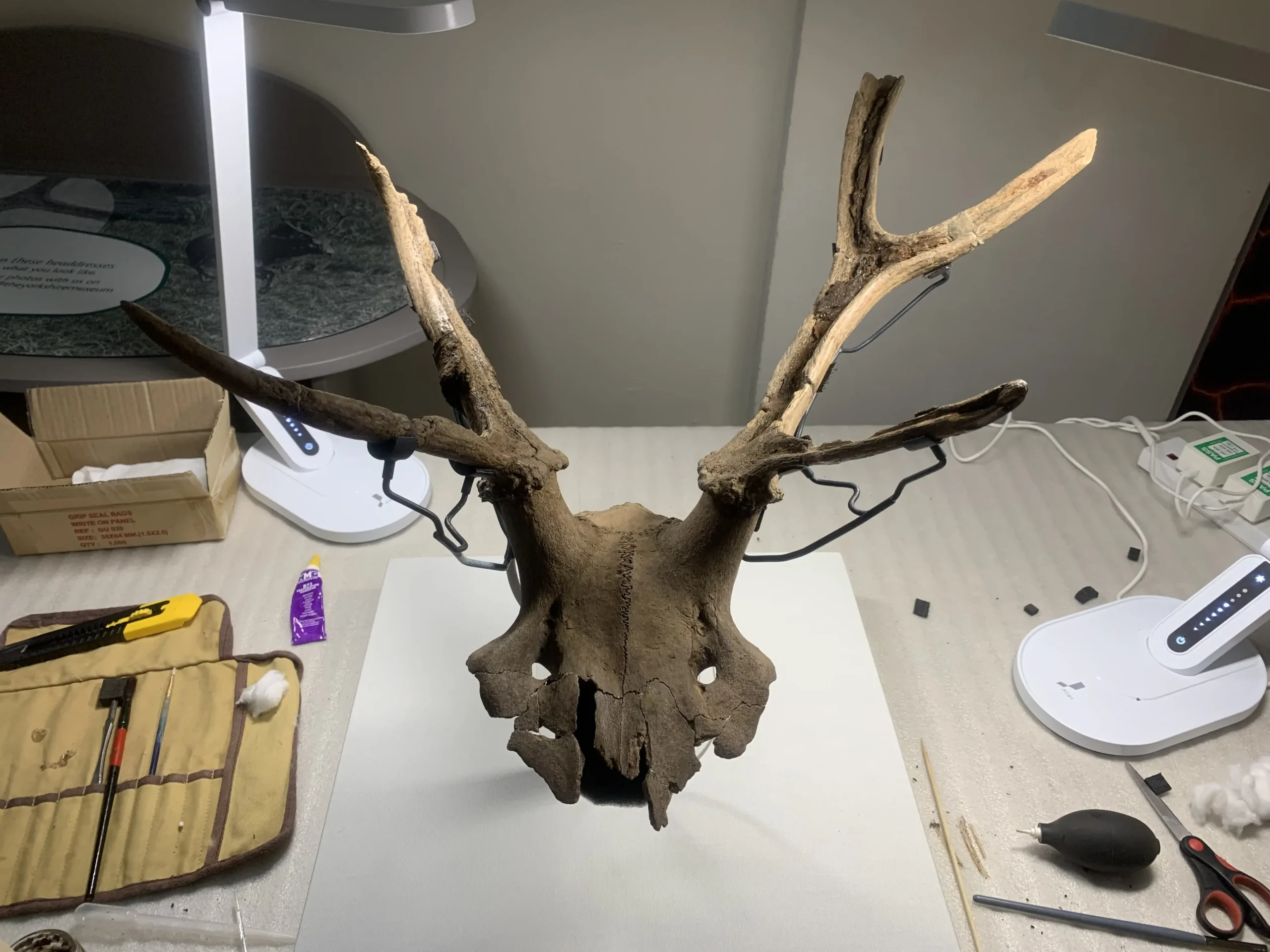
Otherwise referred to as the Star Carr frontlets, these remarkable objects date back to approx. 9,000 BC. Found at the Mesolithic site of Star Carr, North Yorkshire, a total of 33 antler headdresses have so far been excavated, crafted from the antlers and skull caps of red deer and roe deer. The use of the headdresses has been interpreted a number of different ways including use by shaman in ritual activities or as a hunting disguise. The significant concentration of these frontlets has also been suggested by researchers that they were disposed of as part of a ritual or religious practice.
Star Carr stands as one of the most important Mesolithic sites in Britain, offering crucial insights into a largely unknown period of prehistory. In addition to the headdresses, the site has yielded a range of other fascinating finds, including wooden digging sticks and the earliest known example of a complete hunting bow.
Unlike many Mesolithic sites, which typically only produce stone tools due to the rapid deterioration of organic materials, Star Carr’s unique waterlogged environment has preserved these organic items for thousands of years. This rare preservation offers a valuable window into the past, allowing researchers to study materials that would otherwise have decayed over time.
Excavations at Star Carr began in the 1940s, with numerous digs taking place over the decades. These efforts have uncovered a wealth of artefacts and information, including the discovery of Britain’s oldest known structure. Among the most recent discoveries are the results of excavations conducted by the University of York between 2013 and 2015. These digs uncovered 12 antler headdresses and a range of organic materials, including bone, antler, fungus, wood, and birch bark rolls, which were treated and stabilised by the conservation department at York Archaeology.
Condition

The Star Carr headdresses arrived to the conservation laboratory of YA in a fragmented waterlogged state and in some cases presented with a condition known as “jelly bone.” This occurs when calcium and other minerals that normally give bone its rigidity have been leached away by the burial environment, leaving the material soft, spongy, and fragile.
The presence of iron and sulphur were also notable from orange staining, a sulphurous odour and documented analysis of the burial environment.
While the burial environment plays a vital role in the preservation of ancient artefacts, it can also introduce harmful contaminants. Common pollutants found in the burial environment include chlorides (such as salts from iron, sodium, and other materials) and run-off from nearby agricultural activity, which can introduce high levels of sulphates and phosphates. Over time, these substances can permeate into the material of interred objects and cause deterioration. Once excavated and exposed to oxygen, deterioration accelerates significantly. Improper removal of these contaminants while the object is still wet can result in cracking and fragmentation once dry as the residual salts effloresce.
Treatment
Due to the unique nature of the Star Carr headdresses, traditional chelating agents, which are commonly used to remove contaminants such as metal salts, couldn’t be used as these chemicals can also leach away calcium and other minerals from osseous materials such as bone and antler making them unsuitable for treatment. Alternative chemicals and methods were tested but proved to be either incompatible or extremely time-consuming and not ideal for the headdresses, which required a more immediate approach. Instead, a method of continuous rinsing was implemented and carefully monitored. This allowed the water-soluble contaminants to be removed through osmosis.


To minimise further deterioration, such as cracking and shrinkage, several consolidation and drying methods were applied according to the condition of each headdress. These included soaking in low concentrations of glycerol or a colloidal acrylic copolymer mixed with water, controlled air drying or freeze drying.
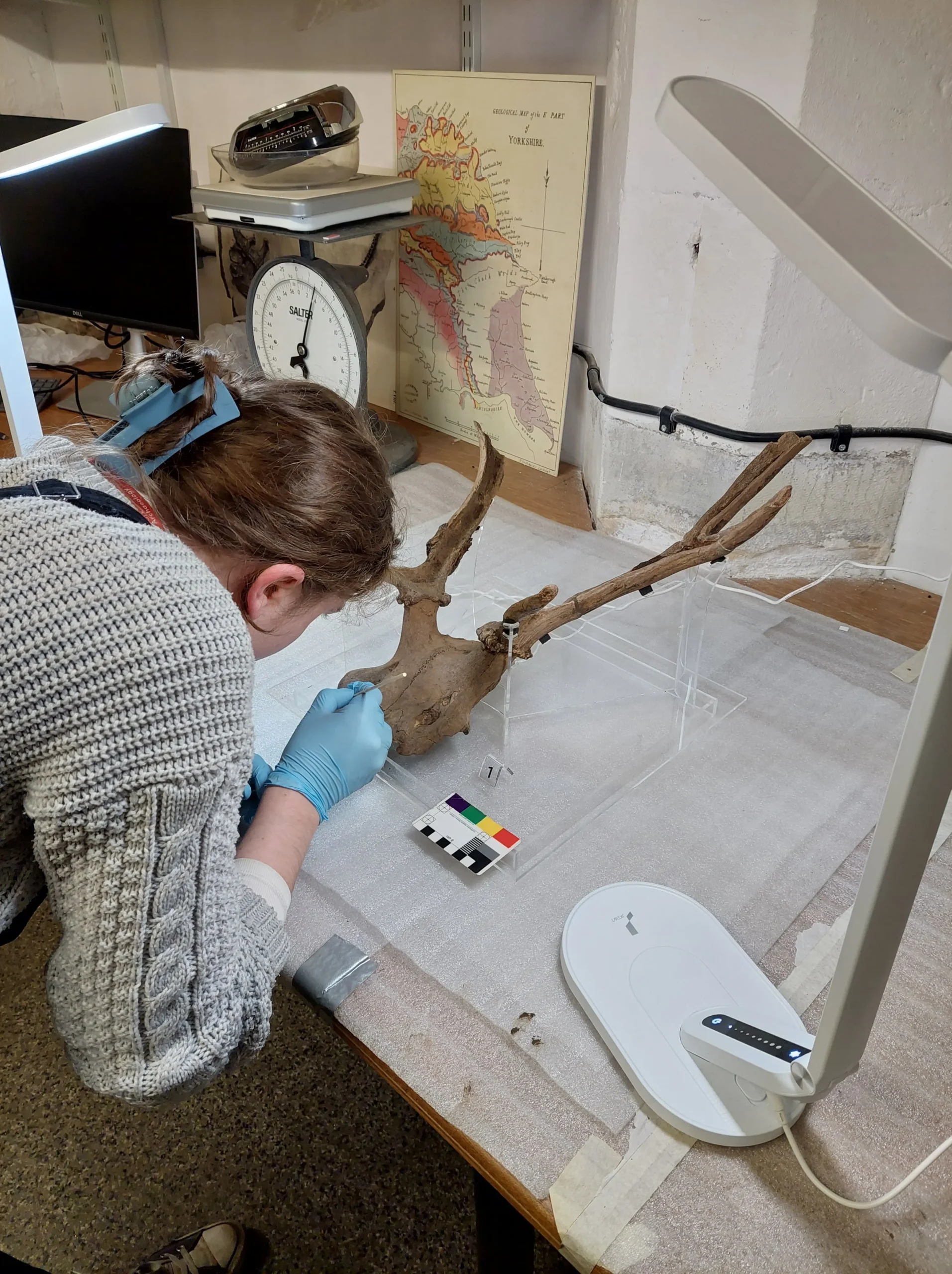
In 2023 and 2024, several of the headdresses underwent additional conservation in preparation for an upcoming exhibition at the Yorkshire Museum. The treatment focused on consolidating fragile areas that were beginning to flake or crack and reassembly using an acrylic-based adhesive. Structural cracks and joins were filled with a conservation-grade filler mixed with resin, then colour matched to blend.
One of the most notable pieces, the large red deer headdress, involved a team effort with the curators and mount maker at the museum to move the headdress onto a bespoke mount followed by stabilising the antler tines to ensure stability while on display.
Ongoing research continues to refine storage methods for the Star Carr assemblage, balancing stability with accessibility, as advancements in technology provide new insights into this fascinating and little-understood period of history.
Artefacts from Star Carr can be found at the British Museum, the University Museum of Archaeology and Anthropology at Cambridge and the Scarborough Museum.
Many of the headdresses can be found on display at the Yorkshire Museum in their current exhibition ‘Star Carr; Life after the ice’.