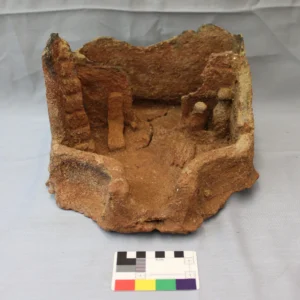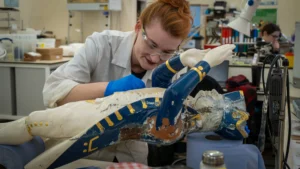
Introduction
In 2016, the City of York Council began a project to renovate and redevelop the historic Guildhall. As part of these improvements, a new extension was built on the north side of the complex, designed by Burrell Foley Fischer and constructed by VINCI Construction.

An excavation was necessary before drainage could be laid and foundations dug for the new extension. Although the archaeological investigation took place only where construction work required deep excavation, it uncovered a variety of remains. These finds add to our understanding of how this part of the city has evolved since the founding of York in AD 71.

The Romans
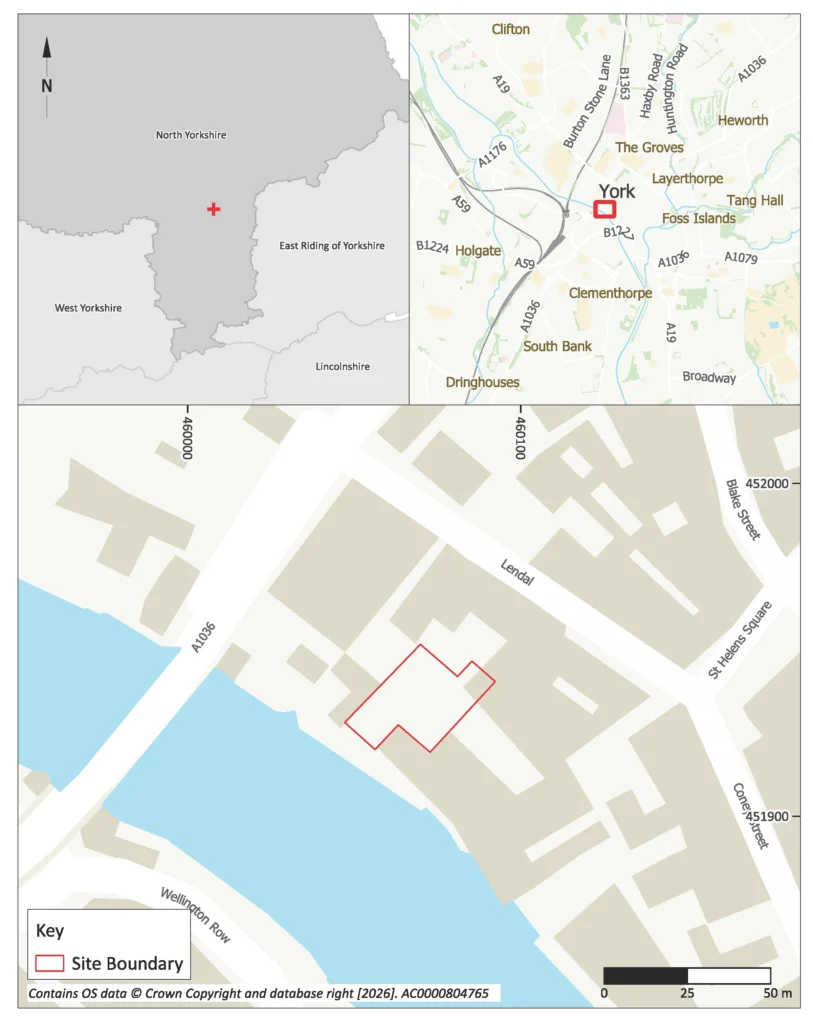
The Guildhall lies near the north-eastern bank of the River Ouse, close to a gateway into the Roman fortress and the river crossing that connected it with the civilian settlement on the opposite riverbank.
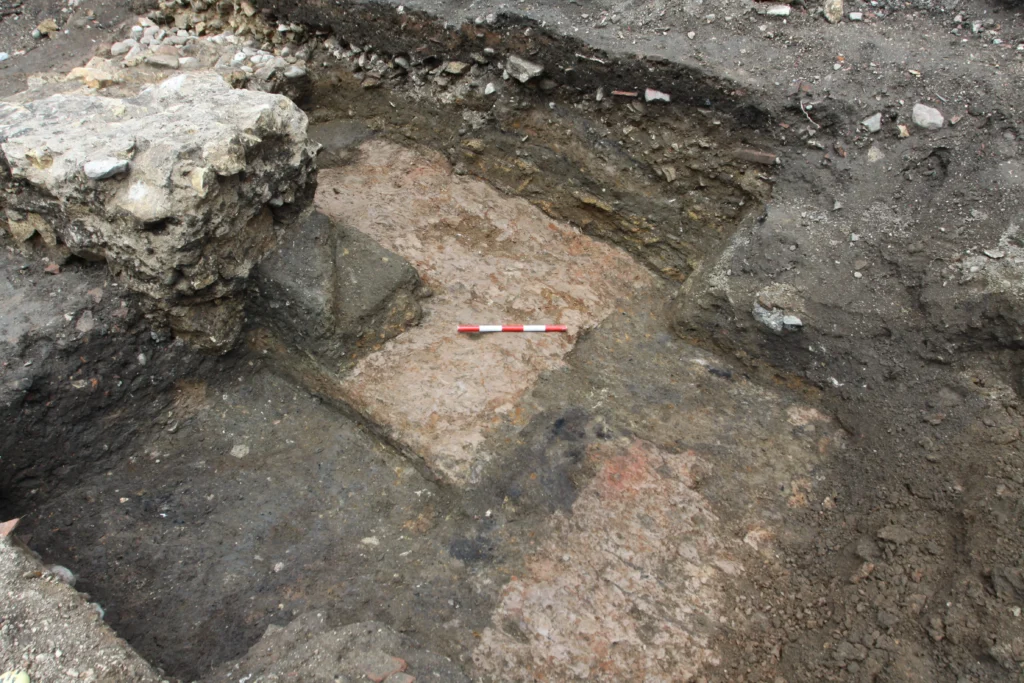
The riverbank was covered with gravel, probably to improve access to the river.

By the 2nd century, buildings had been constructed on the ground at the foot of the bank. Although only the floors of these structures survived, masses of wall plaster were also recovered. Some of this plaster was elaborately decorated, giving us an idea of how the buildings may once have looked before demolition.
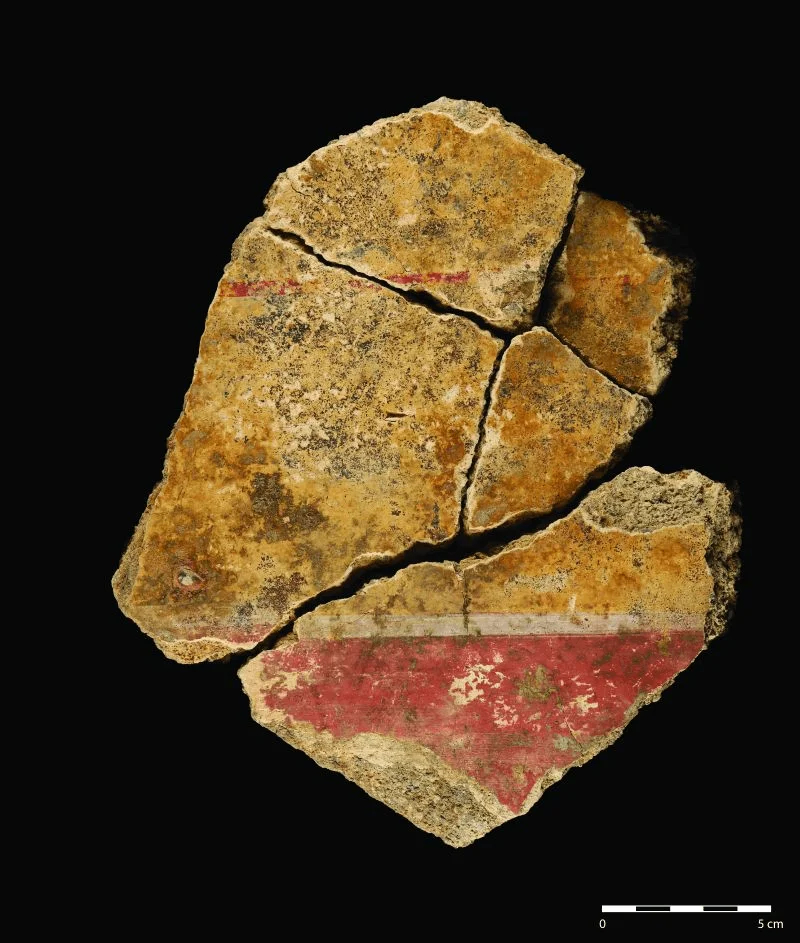
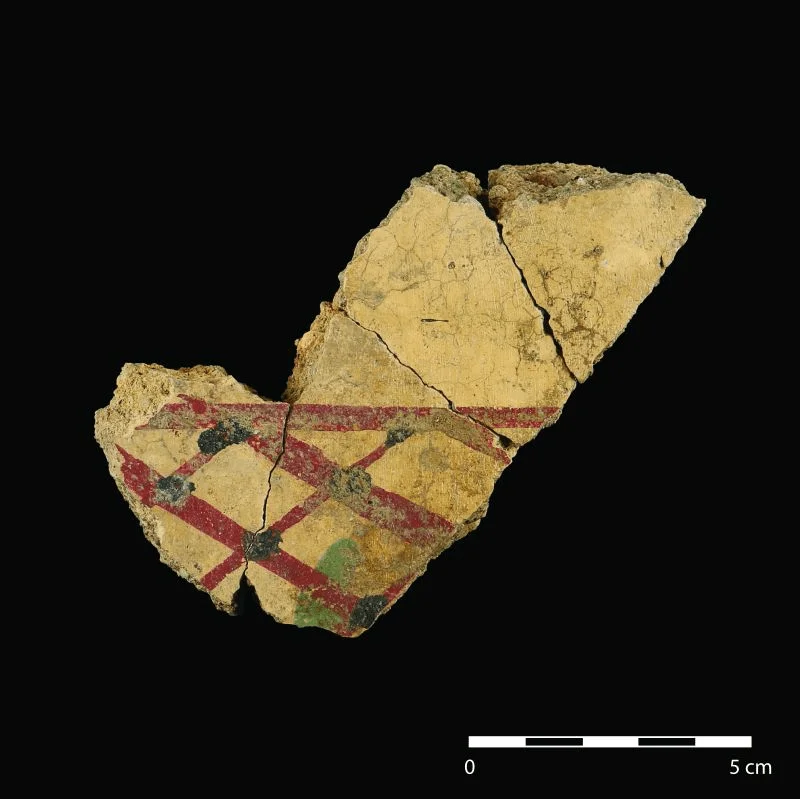
Animal bones and pottery found at the site show that the residents of this area enjoyed a rich and varied diet. Food was stored, prepared, and served using high-quality pottery vessels.
Personal items also provide evidence of an affluent lifestyle, such as this intricately carved bone hairpin.

By the early 3rd century, the buildings in front of the fortress had been cleared away. They were replaced with an area of hardstanding and a retaining wall that ran parallel to the river, possibly to improve the appearance of the newly rebuilt south-western side of the fortress.
Occupation on the site continued into the medieval period, and we will detail those results in a later blog. Watch this space!