
By Scarlett Crow – Conservator
Object Background
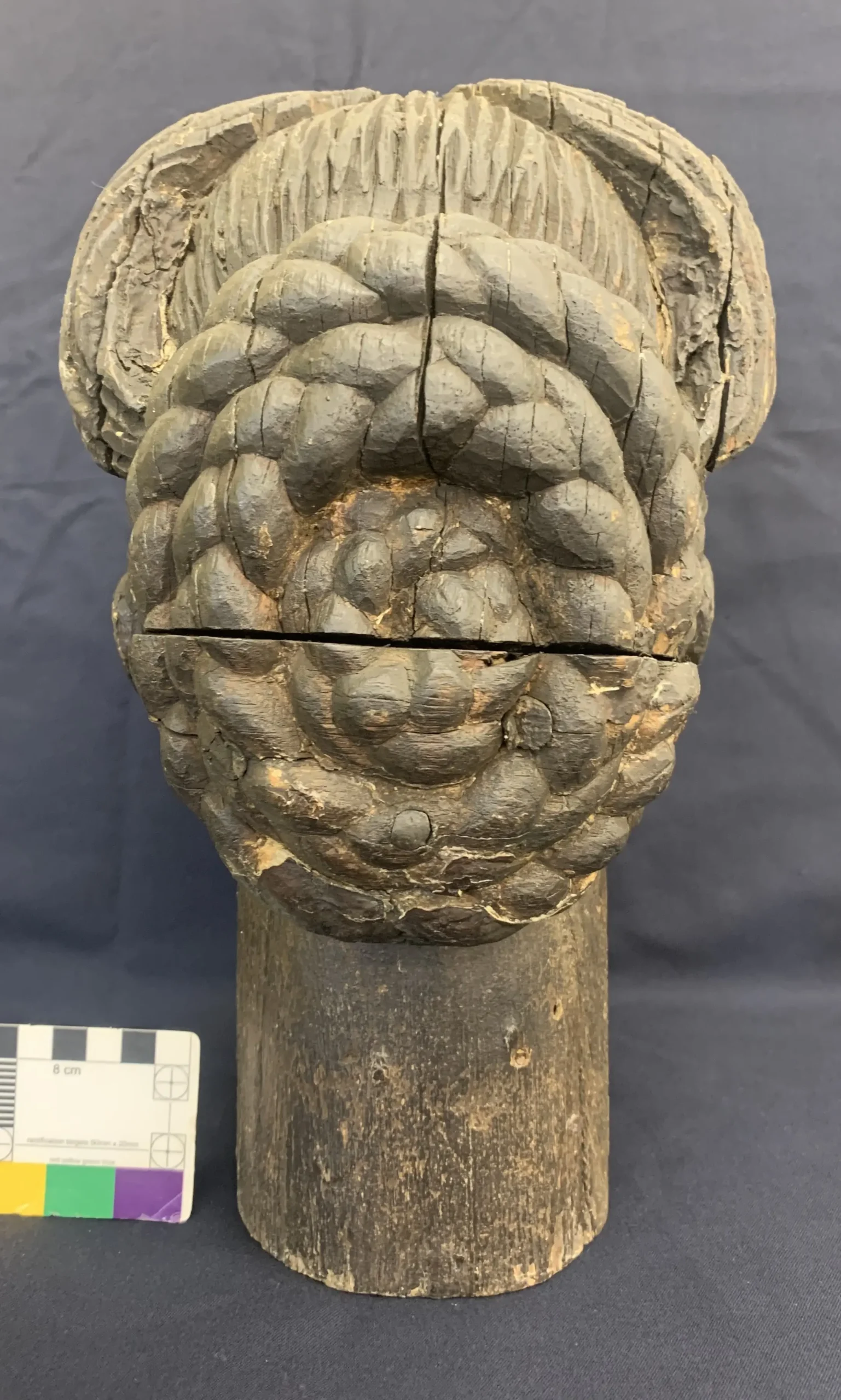
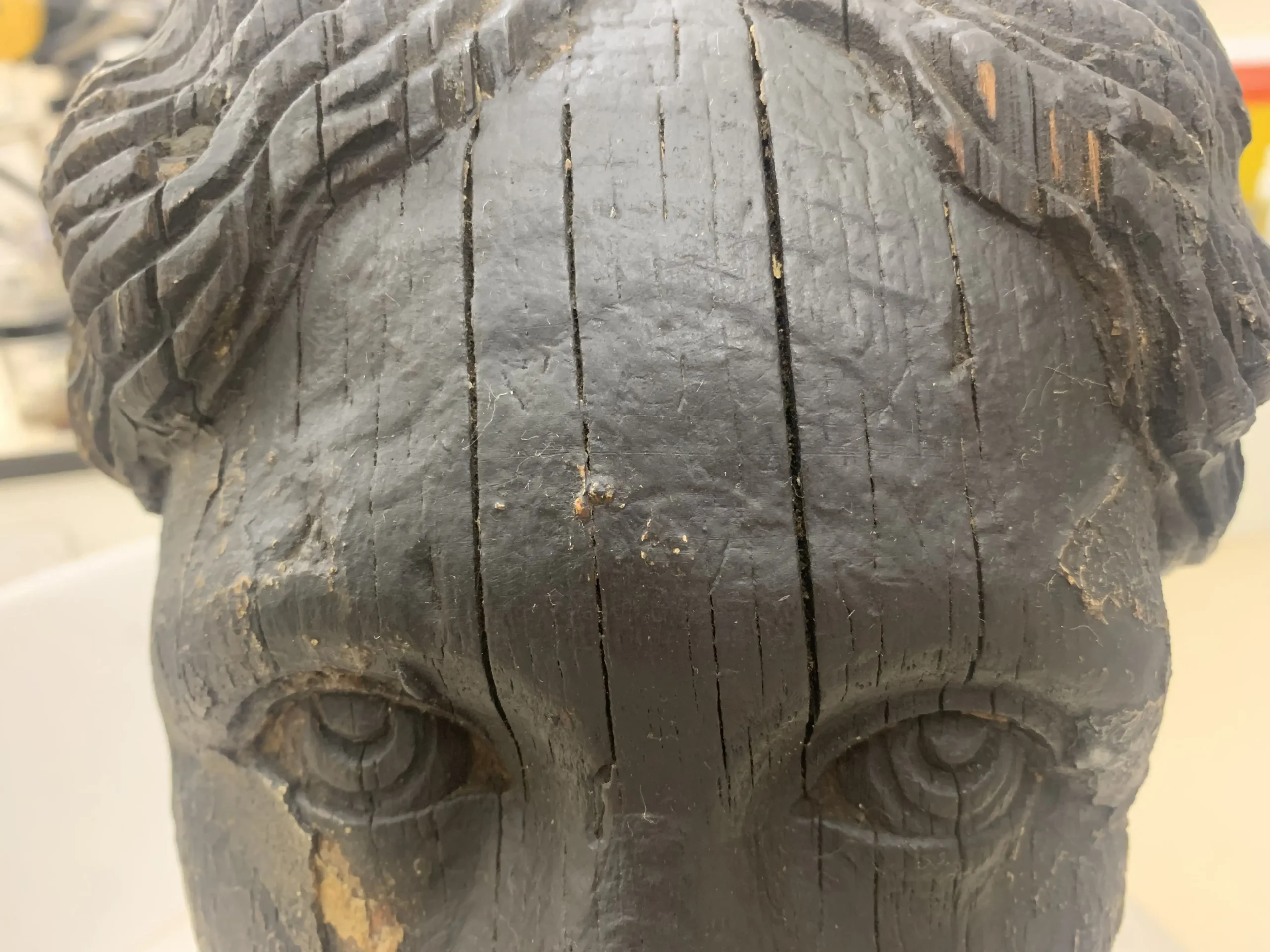
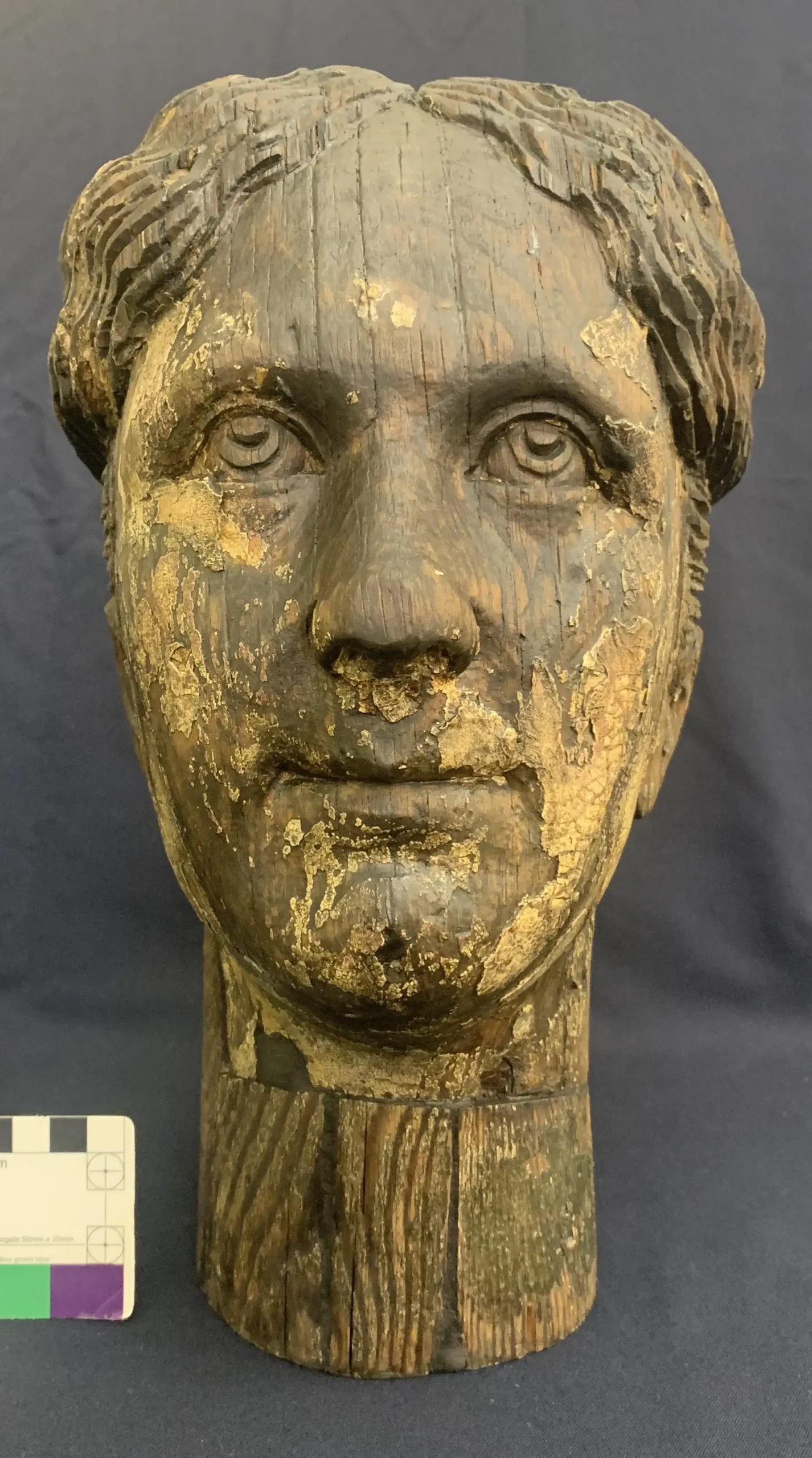
In late 2023, it became a familiar sight in the lab to be greeted by the calm gaze of a 19th century wooden figurehead, brought to us for remedial conservation from the Bayle Museum’s collection in Bridlington. The object consisted of the head and neck of a young woman, carved with a serene expression and delicately braided hair. Despite its age, the detail of the carving and the overall condition were remarkable, especially given its suspected maritime past.
Two inscriptions offered intriguing historical clues. The words “VICTORIA 1893” were painted on the base of the neck, and a piece of typescript paper was discovered inside a hollow cavity at the base. The note referenced a dramatic sea rescue involving the schooner Victoria of Aberdeen during a storm in November 1893. These clues raise the possibility that the figurehead may commemorate or perhaps even originate from this ship and event.
Condition
Constructed from approximately nine individual pieces of wood, the figurehead was held together using a combination of historic adhesives (likely animal glue) and metal fastenings. Notably, the neck and head were made from two different wood species, a strong indication that the neck may have been added at a later date, possibly to allow the figurehead to be displayed upright.
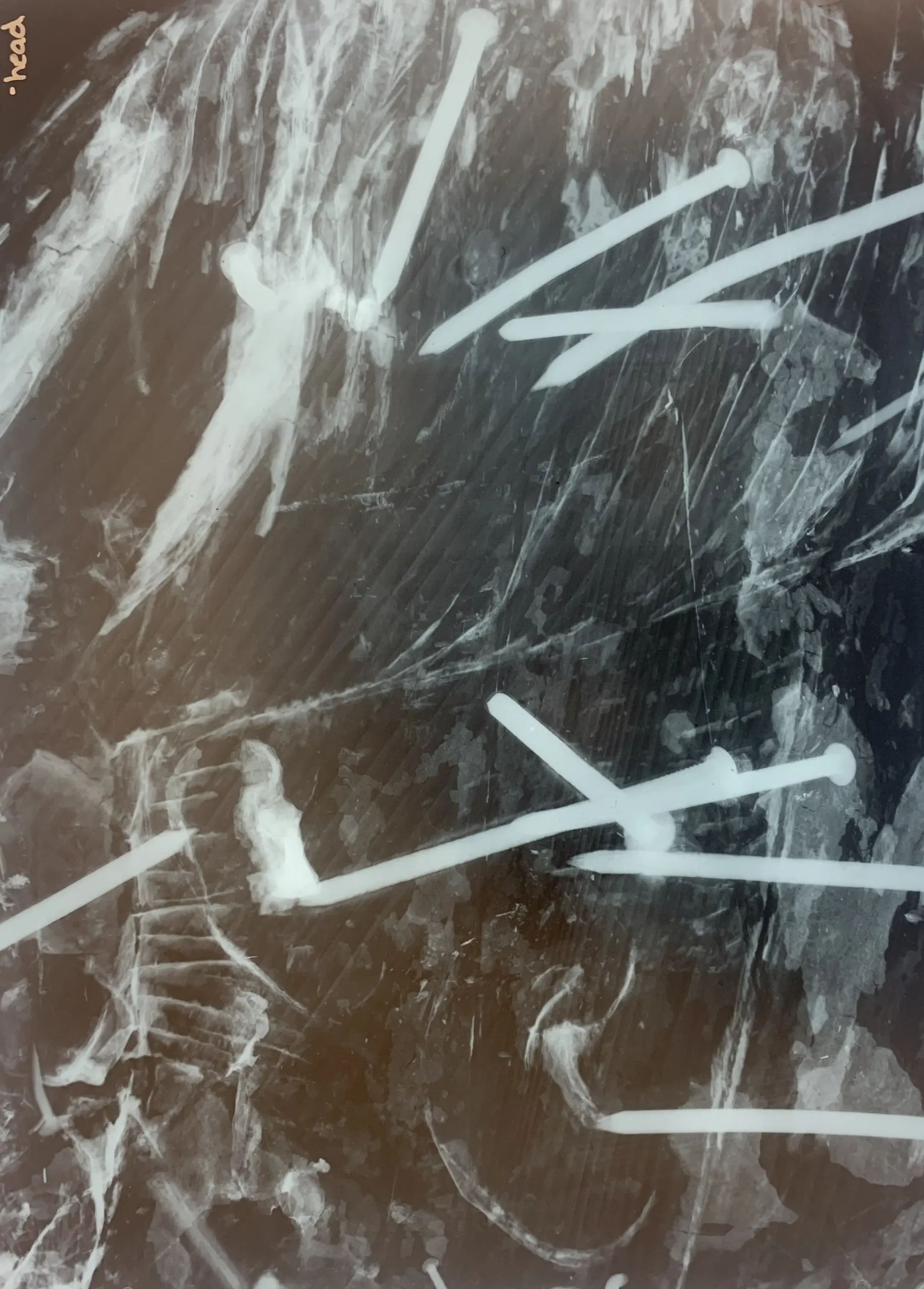
Initial investigations were carried out prior to treatment to help develop a conservation strategy. X-radiography revealed 24 nails inside the structure, used to hold the sections together. The presence of three threaded nails, along with various levels of corrosion, suggested that repairs had been carried out over time as the original adhesive failed. The surface of the wood was also coated in a dark, glossy black layer, likely aged linseed oil which was historically used to protect painted wooden surfaces. However, over time, this coating had oxidised, becoming tacky and waxy, and had trapped a substantial amount of dust and debris. Under UV light, extensive dust deposits were visible, embedded in cracks and across the surface.
Although the majority of original paint had been lost, scattered remnants remained, particularly on the face. X-rays confirmed the likely use of lead-based pigments, consistent with 19th-century maritime paintwork. Thankfully, no evidence of pest activity was observed despite some insect debris found during the removal of surface dust, but this was likely historic and unrelated to the current condition of the object.
From these investigations, a treatment plan was developed with a focus on stabilisation. This included surface cleaning to remove dust, debris, and the degraded linseed oil; securing loose wooden fragments with a conservation-grade adhesive; gap-filling major cracks; and applying a protective coating.
Due to the number of nails within the object, it was decided to leave them in situ and stabilise the exposed areas rather than risk further structural damage through removal. This choice also influenced the selection of adhesives, which needed to retain some flexibility to accommodate ongoing stress caused by corrosion and expansion of the iron nails.
One of the most significant challenges during treatment was the removal of the suspected linseed oil coating. Linseed oil, once oxidised, can cross-link with the wood substrate, making it notoriously difficult to remove without damaging the surface. To address this, targeted research was undertaken. A number of case studies were reviewed, particularly focusing on the conservation of 19th-century polychrome carousel figures in the United States, where conservation students had trialled various methods for removing aged linseed oil coatings. Following discussion and correspondence with professionals involved in these projects, a treatment strategy was established. It was decided to proceed with a water-based emulsifying gel, specifically formulated to safely break down and lift the discoloured coating.
Treatment
The conservation treatment focused on stabilisation, cleaning, and preservation, using reversible and conservation-grade materials throughout.
The first step involved surface cleaning. The figurehead was gently dusted with a soft brush and HEPA-filtered vacuum, using a muslin cloth over the nozzle to collect debris which revealed the presence of more insects but, fortunately, no pests. Porcupine quills and bamboo skewers were used to remove compacted dust from crevices. Initial dry-cleaning methods proved too aggressive and were discontinued. Instead, the emulsifying gel was applied to the surface to break down the degraded linseed oil and ingrained dirt. After testing, a working method was established: the gel was left in place for 10–15 minutes before being removed with solvent swabs. Quills were used again to clean residues from detailed areas and cracks.
The exposed iron nail heads were cleaned with a scalpel and solvent swabs before being chemically treated and stabilised with a conservation-grade acrylic resin to help prevent future deterioration. Loose wooden fragments were secured using a PVA-based adhesive and cracks and gaps were filled with an inert putty, coloured with pigments to match the surrounding wood tones. In deeper voids, a closed-cell foam was used as a backing material before applying the coloured putty to maintain support without adding weight. Once cleaned, the surface was consolidated with a thin layer of water-soluble wax to help protect and stabilise the exposed wood.
After treatment, the figurehead was carefully packed back into its original transport box and returned to the Bayle Museum, now structurally stable, aesthetically improved, and preserved for future study and display.